by | Apr 1, 2022 | Italy |
Ciao, Italia!
Sharing the details of our trip to Italy in only one post would not be sufficient. We traveled over 2,000 miles on a charter bus with 29 people. We strolled the streets of Rome, Florence, and Venice with Local Specialists. We were able to find some artisan handcrafted jewelry and handbags. We had the opportunity to travel in private water taxis in Venice, a ferry boat to Capri, and more. We will provide more detailed descriptions of each of the experiences with an overview of each day.
A vacation of a lifetime requires detailed planning to make sure that it is the memorable trip you want it to be. That part of the process will be covered in another post that will be written at a later time. This post will cover the days leading up to our departure.
Getting ready for our first international trip, we had many things to consider, even before setting foot onto the airplane.
COVID Protocols
To be allowed to enter Italy, we first had to have a negative COVID test result within three days of our arrival. Although the vaccine was not required, a negative test was. We scheduled the test for Wednesday and received the result the next day. On the flip side, to be allowed back into the United States, we had to have a negative test result within one day of our flight. Our tour company arranged for a doctor to come to our hotel in Florence to administer the test. The full COVID mandates for the airlines and Italy will be discussed further in another post.
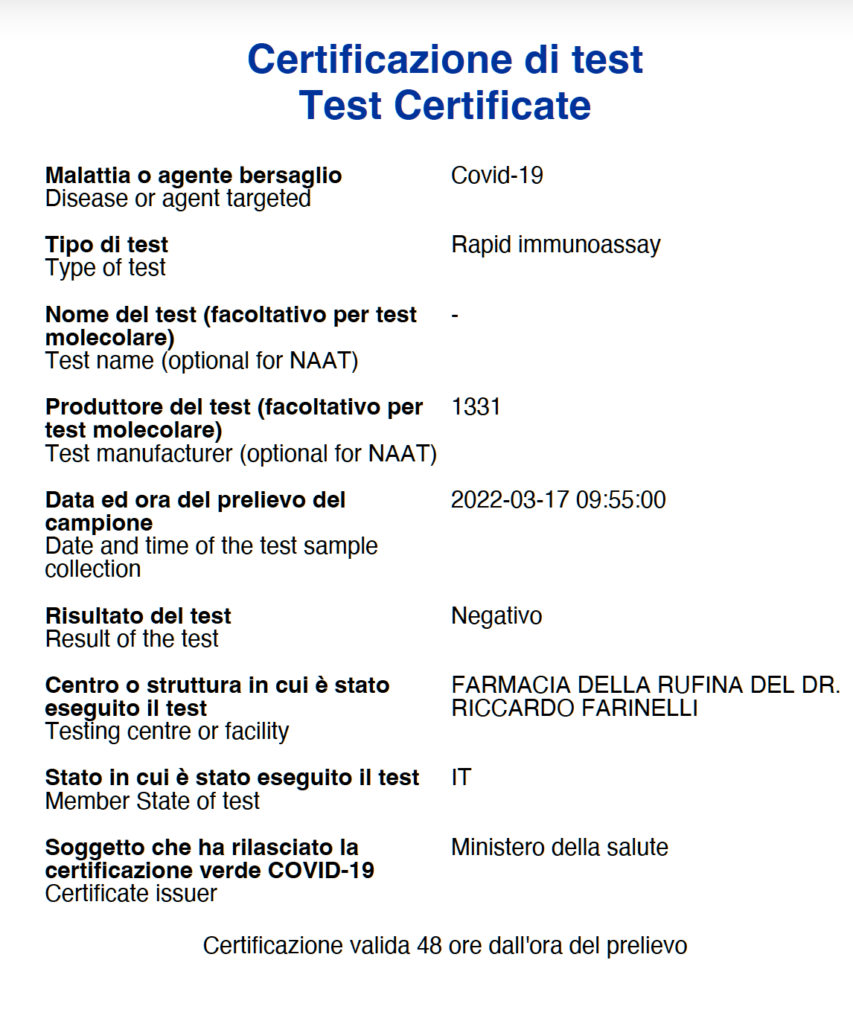
Required COVID test result to return to the United States.
We also had a supply of KN95 masks in different colors. They matched outfits, and we didn’t realize that. Some of our fellow travelers commented on the mask and asked where we bought them.
Passports and COVID cards
We needed to ensure that our passports, COVID cards, and phones were secure and easy to access. We used a slimline fanny pack that could be placed inside our pants. I packed a few pairs of pants that did not need a belt because that can be quite a bit of bulk to sort through. The fanny pack kept us safe from pick-pocketers, but it was challenging to get to it quickly. And then replacing it into the pants was not always smooth. We will be looking for other options for our next trip.
Luggage
My hubby and I wanted to keep it simple and did not want to take much luggage. We each carried one large suitcase apiece and a backpack. As we were packing each of the suitcases, my hubby weighed them to ensure they were under the 50-pound limit. They were taking items out, reweighing, moving items in between suitcases, reweighing, removing things that we felt were unnecessary. It was a lengthy process, but we could get about 45 pounds each for both suitcases. The only problem – we had little room for souvenirs. It turns out that the suitcases were officially weighed by the airlines, so it didn’t matter. My suitcase was almost 60 pounds on the return flight, but nothing was said. Maybe they were more concerned with the COVID test instead.
Euros
The euro is the official currency in Italy. My hubby had to make the exchange at our local bank. We wanted to have enough paper money in hand to make it easier to pay for quick items, but to use the credit card for larger purchases and when it was necessary to have a proper receipt. We allowed about fifty euros per day, plus an extra 200; which was sufficient for our needs.
In our next installment, we will share our experience maneuvering through the airports and arriving in Rome.
Stay Tuned!

by | Apr 1, 2022 | Pets |
There’s no denying that having a pet cat is a rewarding experience. Cats are quiet, engaging, and playful pets, and they’re just as independent and love to explore new places as you do.
They’re also reasonably low-maintenance as pets go; you don’t have to take them out for walks as they do that themselves, and they’re pretty small compared to most dog breeds. Photo Source
Cats are also great for children and adults alike, and when you get a pet cat, they will soon be part of your family. If you’ve never had a pet cat before, the following illustrates what it’s like to have one:
They Will Be Around For A Long Time
While cats don’t live quite as long as tortoises, they can live for up to 20 years in a happy, forever home. That means you’ll have lots of happy memories together, and you’ll have a lot of time together to learn about each other’s routines and habits.
Of course, cats sadly don’t live forever. When they eventually head over that rainbow bridge, you’ll have to think about a cat cremation or burial for your feline friend – and that’s undoubtedly the saddest part of having a pet cat.
They Can Boost Your Mental Health
It’s a well-known fact that animals provide humans with mental comfort, especially during strife and stress. Cats have a very therapeutic quality about them, and they’re very beneficial for lowering pressure and anxiety levels in their owners.
If you have had a bad day at work, for instance, and come home after a long day, getting greeted by your pet cat can make noticeable improvements in your mood.
They Will Keep You Company
When you live alone, you can sometimes feel isolated and lonely if you don’t have an active social life or spend some of your time working somewhere.
Having a pet cat can help people who live alone combat loneliness and feel isolated from the world.
The thing about cats is that they offer unconditional love to their owners, and they can even provide more love and emotional support than some close friends and family members.
They Aren’t Loud
If you had owned a dog in the past or perhaps had one in your family when you were growing up at home, you’ll undoubtedly remember how dogs can be loud.
Some breeds can bark all the time, even if nothing mainly happens in the homes that might cause them concern. One obvious fact about cats is that they don’t bark. You might hear the odd “meow” from them when they’re hungry or want to go outside, but that’s it!
They Can Stay Indoors
Lastly, do you live in an apartment or perhaps next to a busy road? If the answer is yes, you’ll likely feel hesitant about letting your cat go outside. Did you know that it’s possible to have indoor house cats?
Some breeds are better suited to being indoors than others, so it’s something to keep in mind when looking for a new indoor feline friend to join you in your home.
by | Mar 31, 2022 | Lifestyle |
Looking after your teeth is, of course, essential, but you shouldn’t make the mistake of thinking that oral health begins and ends with them. A part of the mouth that sometimes doesn’t get the attention it deserves is your gums. However, failing to notice problems with them and not giving them the care they need can lead to problems just as severe, including tooth loss and infection. Here, we’re going to look at why it’s essential to take care of your gums, and just what you can do to look after them.
What is gum disease?
Gum disease is a term that is typically applied to two conditions. The first, and more common, is gingivitis, which is the inflammation of the gums in response to the infection of bacteria on the surface. There are differences between gingivitis and periodontitis, the more advanced form which is also known as periodontal disease. However, gingivitis is when the gums become inflamed and sensitive, which can lead to irritation and bleeding. When not treated, it can lead to periodontitis, which can lead to irreversible damage to bone and other tissue. As such, treating it while it is still in the gingivitis stage is typically the best course of action. But how do you know when you have the problem, to begin with?
Signs you might have it
How do you know that you should be concerned about gum disease in the first place? Thankfully, there are plenty of clear signs that you might notice. The one that most people tend to see first (and might often ignore) is blood when they are brushing their teeth. This is a common experience, but it’s not one you should ignore. Other symptoms are red and swollen gums, gums that are receding from the teeth, as well as bad breath or a bad taste in the mouth on a regular basis. If you see or feel deep pockets between your teeth and gums or you feel like your teeth are loose or shifting, this might be a sign of periodontal disease, which means you’re going to need dental intervention as soon as possible.
Brush your teeth right
Many of the steps you can take to both prevent and treat gum disease are the standard steps of oral health care that you should already be investing time in. If you’re experiencing symptoms of gum disease despite regular care, it might mean that you’re not doing it right or that there’s an underlying problem making you more at risk. Either way, you should see your dentist. Otherwise, make sure you’re brushing your teeth right, with anti-bacterial toothpaste. Two minutes of brushing, ideally twice a day (including after your last meal of the day) are enough. You should just make sure that you don’t miss any parts of the teeth, which an electric toothbrush can help with. You don’t need to brush super hard.
Flossing is just as important as brushing
A lot of people make the mistake of treating the act of flossing as an additional step, a bonus to go with brushing. That’s not the case. Flossing is just as vital as brushing your teeth and if you don’t floss, your teeth aren’t clean and your chances of developing gum disease remain high. There’s a lot of food that gets stuck between the teeth and you need to get it out to stop it from multiplying the bacteria in your mouth. To that end, tools like Instafloss can make it much easier to floss more quickly and work better for people who might have had trouble doing it manually. There’s no excuse to not clean between the teeth, you just need to find the method that works for you.
Consider the right mouthwash
While mouthwash might not be quite as crucial as brushing or flossing, it can still be a very effective step in the fight against gum disease. In particular, you might want to look at specialist products like TheraBreath mouthwash. In particular, you want to make sure that you’re using a therapeutic mouthwash, which helps to reduce plaque, slow the spread of bacteria, and even slow the development of tartar, which normally you would have to get cleaned with a professional cleaning from the dentist. It’s important to bear in mind that it’s not a replacement for brushing or flossing, however. Rinsing after a meal is great, but you should make sure that you get to brush your teeth at some point, preferably not too long after.
Regular cleanings are crucial
As has already been mentioned a few times, you really should be trying to fight gum disease with the help of your dentist as soon as you think that you might have it. Not only are regular cleanings going to be important to quell the spread of plaque, bacteria, and tartar, but the dentist can also make recommendations specific to your needs. Most importantly, they can tell you the progression of the disease and can tell you when serious action needs to be taken to prevent periodontitis. Going to the dentist can be daunting, but when it comes to keeping your mouth healthy, there really is no avoiding it.
It’s vital to stop it from getting worse
If you see any of the signs of gum disease as mentioned above, then it’s crucial that you do something to treat it while you still can. Gingivitis, as described above, can be treated but it can also develop into periodontitis. This more advanced form of gum disease can cause irreversible damage, which can include the loss of your teeth. As such, if you don’t notice changes when following the steps above, you have to inform your dentist and seek their advice.
Gum disease is one of the most common oral health issues affecting people of all ages. If you’re not taking the steps to prevent and fight it now, you can end up paying for it further down the line. Hopefully, the tips above help you in doing that.
by | Mar 30, 2022 | Lifestyle |
Life can be hectic and chaotic at times, which may make you feel anxious and out of sorts. While you don’t have control over all that occurs, you must realize that there is a lot that is in your possession, and this is what you should focus on.
It is possible to slow down and experience less stress when you make an intentional effort to change your lifestyle and habits. You may find your new existence quite rewarding even though it’s quieter and, at times, less exciting. Take time to learn how to lead a calmer life if you’re ready to get out of the fast lane.

Photo by ArtHouse Studio from Pexels
Choose the Right Career
Lead a calmer life by choosing the right career that won’t bring about a lot of stress and pressure. For example, first responders have a lot to deal with on any given day and may cope in self-destructive ways. Consider which line of work and type of job might be best suited for you, given that you’re trying to slow down. Think about your passions and what types of jobs won’t be demanding and taxing so you can go to work feeling happy.
Meditate & Practice Deep Breathing
Another way to lead a calmer life is to rearrange your schedule to include some downtime for yourself. Use these moments to meditate, reflect, and practice deep breathing exercises. Engaging in regular meditation sessions is excellent for reducing stress, boosting your mental health, and it’ll help you stay positive through challenges. The best part about deep breathing is that you can do it anywhere and anytime you wish.
Spend Time Outside & in Nature
Nature has a natural way of healing and putting you at ease the minute you step foot in it. Therefore, you can lead a calmer life by spending more time outside and enjoying all the outdoors. Surround yourself with beautiful scenery and fresh scents and you’ll be on your way to feeling relaxed and happy. There are many activities you can do outside to allow you to enjoy nature and the sunshine.
Keep A Small Inner Circle
Your life will be calmer when you avoid drama and don’t get involved in sticky situations or hang around negative people. If you’re feeling overwhelmed or uneasy in social situations, it may be time to revisit who you spend time with. Lead a calmer life by keeping a small inner circle that includes those who genuinely care about you and want to see you succeed. You’ll find that doing so may mean fewer activities and events but more peace and calm in your days.
Conclusion
Leading a calmer life isn’t an easy goal to achieve but can be done when you modify your way of life and routine. Consider implementing these tips and see if you begin to feel more in control and calmer, and less anxious over time. It’s all about what you choose to do and focus on and your priorities to get to a better place.
by | Mar 29, 2022 | Fitness |
If you aren’t sure if you are healthy, this guide will help you find the answers you need. Here you can find out if there is anything that you can do to try and be healthier while also taking better care of your family.

Source: Pexels (CC0 License)
You Don’t Talk with Anyone
The benefits of having a deep relationship are numerous. If you are in a long-term relationship, you may find that you can significantly improve your mental health. Studies have shown that family ties are one of the many reasons people live longer. Connections and belongings are essential if you want to live a happier life, and it is necessary if you’re going to be as healthy as possible. Want to make a change? Try to form deep connections with your family and make sure that you do what you can to prioritize your mental health and your physical health.
Sitting Down All Day
Sitting down all day is very bad for you. Recreational sitting, such as sitting in front of the television, can increase your chance of death and cardiovascular disease. Even if you are healthy, sitting for long periods is very bad. If you want to do something about this, you need to try and put in the effort to move around more. You may carry around between episodes when watching a TV show, or you try and focus on not watching TV for as long each night.
Not Stopping
Do you feel as though you ever give yourself a chance to breathe from the time you wake up to when you go to bed? When was the last time you took just 15 minutes for yourself? If you can’t remember, this is a real shame because the benefits of just taking some time for yourself are immense. Meditation can reduce stress significantly, and you may even find that it can improve your mental health, so this is an excellent way to counter the harmful elements in your life.
Ignoring Creativity
Expressing yourself from a creative standpoint will reduce the chance of experiencing disease significantly. It also helps to rocket your health and your general wellness. Studies have shown that if you can reduce your stress and anxiety by being creative and increasing positive emotions, this will give you a host of benefits.
Ignoring Appointments
Think about it, when was the last time you attended an appointment for your health? It was probably quite some time ago. If you want to do something about this, you need to make sure that you are doing what you can to keep up with those commitments. Book in with your dentist and go for your yearly physical with your doctor. If you can keep up with this, then your health will be less of a worry, and you may find that you end up feeling happier overall.









Follow!